
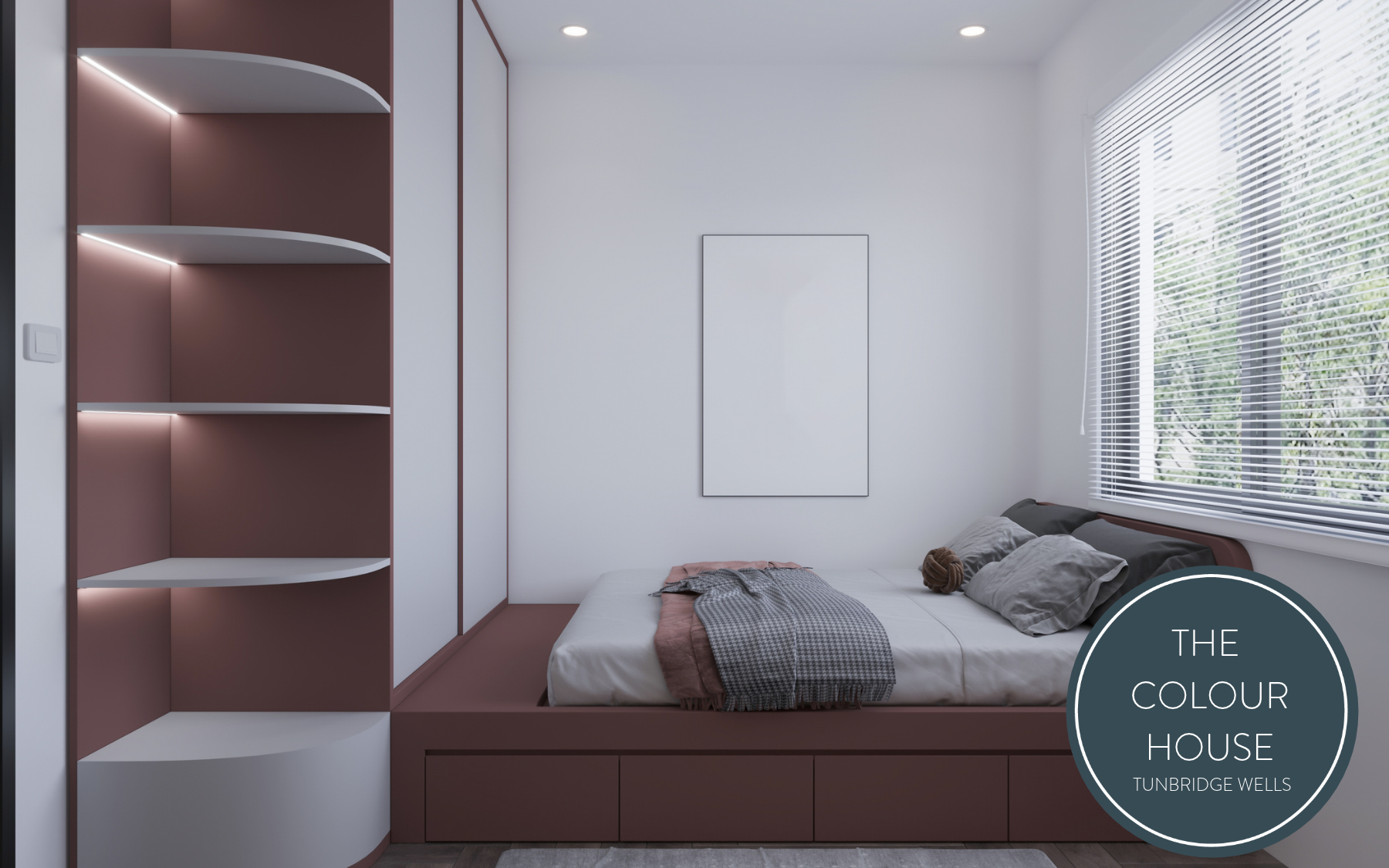
That box room. The narrow hallway. The kitchen that feels like a corridor. We've all got a small room that makes us feel a bit hemmed in. But here's the good news: you don't need an extension or a sledgehammer to fix it. With the right decorating choices, you can transform your compact space into somewhere that feels genuinely bigger.
These eight techniques really work. We've used them in homes across Tunbridge Wells and beyond, and the difference is always remarkable.
Choose Light Colours for Your Small Room Walls
This one's a classic for a reason. Light colours reflect more natural and artificial light, which opens up your space instantly. Think soft whites, pale greys, gentle creams and barely-there pastels.
Dark colours absorb light and make walls feel closer than they are. That doesn't mean you can never use them, but save dramatic shades for accent walls or larger rooms where you want cosiness rather than spaciousness.
Want to go bolder? Try a light colour with cool undertones. Pale blue or soft sage can make walls feel like they're receding, giving you that extra visual breathing room.
The Ceiling Matters Too
Paint your ceiling the same colour as your walls, or go even lighter. A white ceiling with pale walls creates a gentle contrast that lifts the eye upward, making the room feel taller. It's a simple trick that costs nothing extra but delivers real impact.
Use One Colour Throughout Your Small Room
When you paint everything in the same shade, including skirting boards and door frames, you remove visual barriers. Your eye travels around the room without stopping, which makes the space feel continuous and larger.
This approach works beautifully in awkward spaces like hallways and landings where architectural features might otherwise chop up the area. The result is calm, cohesive and surprisingly spacious.
Embrace the Power of Gloss and Sheen
Matt finishes absorb light. Gloss and satin finishes bounce it back into the room. That reflective quality is your friend in a small room, especially on woodwork and trim.
A subtle sheen on your walls can work too, though you'll want to ensure your wall preparation is spot-on first. Any imperfections show up more with reflective paint, so proper filling and sanding become even more important. Our team always takes extra care with surface preparation before applying these finishes, because the result depends on getting the groundwork right.
Add Vertical Stripes to Your Small Room
Vertical stripes draw the eye upward, making your ceiling feel higher than it actually is. You don't need bold, contrasting stripes either. Subtle tone-on-tone stripes in two shades of the same colour give you the height-boosting effect without overwhelming the space.
This technique works particularly well in rooms with lower ceilings where you want to create a sense of airiness. According to research from the Royal Institute of British Architects, perceived ceiling height significantly affects how spacious a room feels, even more than floor area in some cases.
Keep Woodwork Light and Bright
Dark skirting boards and door frames create a visual frame that boxes in your space. Light woodwork blends with pale walls, letting your eye travel freely around the room without hitting those visual stops.
Crisp white or off-white trim also reflects light beautifully, adding to that sense of openness. It's a detail that makes more difference than you might expect.
Consider Where Your Small Room Gets Its Light
North-facing rooms receive cooler, bluer light throughout the day. South-facing rooms get warmer, yellower light. Your paint choice needs to work with this natural light, not fight against it.
In a north-facing small room, warmer whites and creams can balance the cool light and prevent the space feeling cold. In a south-facing room, cooler whites stay fresh and bright without looking yellow. Test your colours in the actual room at different times of day before committing. Paint samples directly onto the wall rather than relying on tiny colour cards.
Create Continuity Between Rooms
When you can see from one small room into another, using the same or similar colours creates flow. Your eye doesn't stop at the doorway, so the combined space feels larger than the sum of its parts.
This works brilliantly in flats and terraced houses where rooms connect through doorways. The technique is backed by interior design research published by the British Institute of Interior Design, which shows that colour continuity significantly affects spatial perception.
Don't Forget the Fifth Wall
Your floor is part of the colour story too. Light flooring extends that sense of space downward, especially when it coordinates with your wall colour. If you're painting floorboards, consider a pale grey or white that reflects light upward.
Even if you're not changing your flooring, thinking about how your wall colour works with what's underfoot helps create that cohesive, spacious feel you're after.
Getting the Details Right
These techniques work, but only when they're executed properly. The difference between a small room that looks bigger and one that just looks pale comes down to preparation, quality materials and careful application.
That's where professional expertise makes itself felt. Achieving those clean lines, perfect finishes and subtle sheens requires experience and attention to detail. If you'd like to discuss how we could transform your compact space, get in touch with our team. We'd love to show you what's possible.